Saturday, January 15, 2011

A brief thought about thinking about the game; or, brevity is the soul of wit.

Although having conversations with one's self is a fairly reliable indicator of insanity, it is a hallmark of writing or thinking about a given subject.  Solipsism is a (big-ish) part of cogitating about any subject. The trouble is that when thinking about Ultimate (or any team sport) one's on field performance and individual effort only matters in the context of one's team.  However, it is so easy to consider Ultimate from the tried and true perspective of the narcissist.

Sadly, as much as it pains me to admit it, any worthwhile analysis of either Ultimate strategy or Ultimate tactics is almost completely dependent on context.  To wit, the worthwhileness of any Ultimate analysis depends on: the athletic makeup of the team, the individual's athletic makeup, the mental makeup of the team, the individual's mental makeup, the interplay of specific individuals on the team from a physical/mental perspective, etc.

The above may seem strange for me to write, given that I've written tens of thousands of words trying to figure out some useful insights about strategy and tactics.  In the end, however, I'm the only one whose thinking about the game has become any clearer.  Those readers who have had moments of clarity while reading most likely did 99.9% of the clarifying for themselves (and the remaining 0.1% could have occurred while reading a cereal box or updating their facebook or sleeping).

The only intellectually honest thing to do when I attempt to look at the game (which I may still do on rare occasion) is to find a few specific objective measures that can provide SOME context and SOME useful comparison between different teams/different leagues.  Specifically, I'm talking about 2 stats.

Thinking about offense
Touches: count how many times a given player touches the disc.
Turns: count how many times a given player is the last one on his/her team to touch the disc in a possession that doesn't end in a score.  A turn gets counted for both thrower and would-be receiver regardless of the quality of the thrower, provided the receiver actually touches the disc.
Touches-to-turns ratio: a rough approximation of a given player's ability to offensively benefit his/her team (aka stay on offense).

Thinking about defense
Touches allowed: count how many times a given player's mark touches the disc.
Turns created: count how many time a given player's mark makes a turn.  A turn gets counted for both thrower and would-be receiver regardless of the quality of the throw, provided the receiver actually touches the disc.

Everything beyond these two basic statistics seems to be too idiosyncratic for my feeble mind to feasibly analyze.

Friday, August 20, 2010

A brief thought about defensive position.

You have been called to hold a high position, but not a safe one; a sublime position, but not a secure one. How terrible, how very terrible is the place you hold!
-St. Bernard of Clairveux to Pope Eugenius III

I know that nobody, with the exception of football d-backs coaches, cares about defensive coverage angles.  And I'm not suggesting that you care deeply about them either.  But, if you decide that you care about shutting your man down every time you are on the field, your coverage angles are going to matter TO YOU.

Angles are hard for everyone.

So, let's talk very simply for a moment about what we mean be defensive coverage angles.  If it's a dead disc and you are 1 of the 6 defenders on the field who is not engaged primarily with the thrower, then you'd like to find a place to stand where you can see your man and the disc in its current position.  The place wherever you choose to stand will determine your defensive angles (IE whether you're likely to move to your right or left and whether you're likely to move in or out).  

At the risk of being overly simplistic, the reason you'd like to see both your man and the current position of the disc is because those two factors determine everything about where you choose to stand.  Taking your eyes off of your man is a great way to get beaten both deep and in.  Taking your eyes off of the disc is a great way either to watch your man very closely as he catches a goal or catch a quick glimpse of the disc just after it flies within an arms length of your head.

Given the choice of watching 1 or the other, you'd choose to watch your man and pray that somebody is calling the "ups".  The thing is, there's no reason to make that choice because you don't have to.  You can figure out a way to spend most of your time watching, IF you make the decision to work 2% harder.  That 2% harder isn't a sprint and it's not a layout.  It may not even be a jog.  At times, it's constantly having your head on a swivel, checking on the thrower and checking on your man repeated ad infinitum.  At times, it's deciding to walk 2 or 3 steps to a slightly different position on the field.  But, those 2 or 3 steps are the difference between you getting beat and you getting your hands on the throw.  That head swivel and those 2 or 3 steps are a big part of your defensive position.

There is no magic formula for defensive positioning in a dynamic game like Ultimate.  And even if there were, each individual match-up you have will be different as far as speed, quickness, cutting ability, and anticipation.  The best thing that I can communicate to you about improving your defensive positioning (and therefore improving your defense) is that you have to constantly make it a priority (it = the location on the field or the body position where you can easily see your mark and the current position of the disc).


A friend suggests that as the game moves to a higher level (elite or nearly elite), you need to become more and more comfortable with the head swivel positioning rather than a complete body positioning shift.  His reasoning is that, at the elite/near elite level, even 1 step farther downfield than your mark (allowing you to more easily see the mark and the disc) makes it too simple for the receiver to punish you with an in-cut.  I agree with this because, at the level he's talking about, it is too much of a disadvantage to move your body away from your mark. 

The glasses you'll need if you DON'T want to get in good defensive position, 
but you DO want to see both your man and the disc.

You will want to rest during points.  You will have every reason why it doesn't matter that you get yourself to that position.  Even if you don't think you will, you will.  In a match-up against a formidable opponent, you will look for spots to rest.  I don't mean rest for a while.  I mean that you will look to get 1/2 a second of rest because you've just controlled your man for 3 hard cuts down the field followed by 3 hard cuts back while you have shadowed his every movement.

And I don't fault you for wanting to rest.  I don't fault you one bit.  In fact, all that I want you to is rest in a slightly different position so that all of your previous hard work isn't wasted because you lose sight of the disc for a moment and your man catches a goal on you.  In that moment where you really want to get 1/2 a second of rest, just take 1 extra second to swivel your head to check on the disc or to finish in a position that allows you to see your man and the disc (you may end up slightly upfield in this position).  Then, rest all want, provided your head is constantly swiveling back and forth.  You'll know exactly what's happening from that spot, at least until the disc moves.  When it moves, you'll take a 1/2 second to adjust your position and then continue resting.

Here's an important point that I've mistaken for finding good position before: do not just assume that by forcing in and taking away the deep, you've put yourself in a good defensive position.  This little shortcut nearly always goes wrong because receivers simply don't cooperate.  They're happy to catch uncontested in-cuts.  And when you least expect it, they fake in, catch you leaning, and cut deep.  

You don't have to give anything to the receiver (and you shouldn't).  Getting in good defensive position does not mean you give up the space that you control.  It, in fact, means you give yourself to control all of your mark's field space.  If you're facing a good receiver, good defensive positioning has everything to do with you constantly swiveling your head to check on the disc.

Good defensive position won't make the plays for you.  But, it will give you the chance to make a lot more plays and see how a lot of things setup. 

Thinking about fitness OR Why wasted effort is important

Waste is worse than loss. The time is coming when every person who lays claim to ability will keep the question of waste before him constantly. The scope of thrift is limitless.
-Thomas Edison
We cannot afford idleness, waste or inefficiency.
-Eamon de Valera

While I was throwing around with Jim (short for Jimothy) and Al (short for Albert) yesterday, I got to thinking about why Ultimate is tiring.   I wasn't thinking about  it being tiring for players who can't comfortably play pick-up without getting winded.  I was thinking about it being tiring for talented players who are one step down from elite.

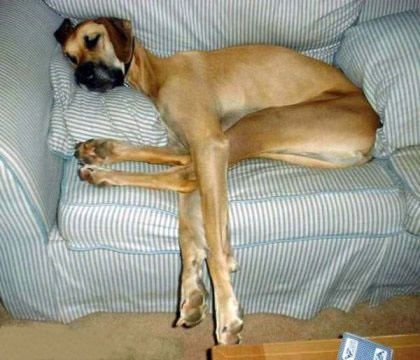
This dog has been playing hard man-to-man defense and is taking a point off.

I ended up arriving at the same unsatisfying answer I have in the past: wasted effort.  Wasted effort is defined as hard work that you do on the field that gives your team no advantage.  Even good players spend quite a bit of time on the field working hard for nothing.


And, lest you think I've gone soft in the head, I'm in no way talking about defense.  If you work hard on your mark, never giving him an opening to receive a throw or never giving him a throw to make, then you are not working hard for nothing.  There is no direct statistic that measures that sort of defensive effort (because Ds only come when the opposing team tries to throw it to your mark), but your hard work is succeeding in completely taking away an offensive option.  And, in a lot of ways, that's the best defensive result you can possibly hope for.


The wasted effort I'm referring to comes on offense.

Cutting well (at least cutting well against a defender who is determined to stay with you) is not easy.  Against a determined defender, it takes a fair amount of concentration on setting yourself up correctly and setting your opponent up to be out of proper alignment.  As if that wasn't difficult enough, you also have to time your explosion from the setup process well enough to get separation from the defender just as the thrower is catching the disc and looking your way.  If you are too early, you run out of room to continue your cut before the new thrower has had a chance to throw to you.  If you are too late, the thrower has already looked your way, decided you aren't open, and moved on to another target.

It is this second part of the receiver equation that causes most (if not all) of the wasted effort. The timing of a receiver's setup and cut is rarely talked about or practiced, but it is of vital importance.  A receiver can be a magnificent cutter with great agility and power, but without the correct timing, it is all a waste.  And not only will this waste hurt the team by constantly removing a useful target from a thrower's options, but it will also hurt the receiver's ability to continue playing well as he gets physically and mentally fatigued from so much fruitless cutting.

This shows the amount of wasted effort you find in just one possession.

The lesson that most players unfortunately take away from this is that it is smart to be lazy.  Why should you work really hard to perfectly setup and execute a cut when you don't even get a chance at the disc after all your hard work?  Isn't it better to just make lazy jogging cuts so that you don't have to get tired for no reason?

The lesson that I wish most players took away from the fruitless cutting situation is that it is more important to perfect your timing than it is to perfect your cutting setup.

I'm not suggesting that players shouldn't work on their cuts and setups in isolation.  They should, as that is the only way to make better cuts is to practice the physical skills in a vacuum.  But, to make better cuts in a team scenario (where nobody cares how you got open, they just care that you got open), players need to work on their prediction and anticipation.  Basically, up to the elite level, time is better spent for most players figuring out exactly when/where the next cut should come from.


If you had a group of player who had perfect timing, but minimal conditioning, they would be just fine on offense.  The reason they'd be just fine has little to do with their physical skills.  It has nearly everything to do with their mental skills.  Put bluntly, they'd have 0% wasted effort.  I'm sure you could create a defensive team that would beat this hypothetical, perfect timing team.  But, it would take some really top-notch defenders.

On defense, on the other hand, very little effort is wasted by anyone (great athlete or poor athlete).  As I've written before, the offensive player controls the effort level of a man-to-man defender.  I've never seen a defender waste effort sprinting back and forth while the man he is guarding jogs around.  As players, we simply realize that it makes no sense to "out-work" your opponent when the opponent is no threat to do anything to help his team.  Being 1% better than your mark is just as good as being 75% better in a strictly 1-on-1 match-up.  But, in a 7-on-7 situation, not wasting effort being 75% better than your mark allows you to do many other useful things like poach, help, etc.

It is for the reasons listed above that I think what separates average players from great players mostly has to do with wasted effort or the consequences of fearing wasted effort.

Thursday, August 19, 2010

A moderately interesting return to posting.

There are only two mistakes one can make along the road to truth; not going all the way, and not starting. 
-Siddhartha Gautama Buddha

Gentle Reader(s):

It has been quite a long time since I have had any thoughts worth recording.  Given that the last time I recorded any thoughts on this blog was November of 2009, I figure that it's time to get back in the habit of writing out my thoughts on a specific subject.

The main difference you will notice about this blog now is that I'm not as sure as I used to be about anything.  Of course, if you speak generally enough and aren't looking to have semantic arguments, you can be sure of a few things.  But, these things aren't really worthy of anyone's attention.  This is why these new posts will be a collection of opinions and ideas only.  I make no claim of superior wisdom in these matters.

My concentration at this point will be focused, once again, on cultivating a GENUINE understanding of the fundamentals of the sport.  This genuine understanding is something that players can use to improve in their personal problem areas (IE defense, hucking, cutting, etc.).  I fear that, with Ultimate being such a young sport designed almost as a more reasonable response to traditional sports, the fundamentals taught in other sports are assumed to be unnecessary.  The vast majority of people pick up the game piecemeal from watching others play and by playing themselves.  Their thinking on the game never really goes beyond what they picked up in the very beginning because they never really received any instruction on how to play it well.

I don't mean to say that the skills of the vast majority of players don't improve.  They do.  It's just that the conceptual framework within which they place those skills doesn't seem to improve much.  This is because, they did NOT receive any traditional instruction on how to play the game well.  Their understanding of the game remains fixed in time.  It's like finally getting some wonderful furniture, but placing it inside your dilapidated house.

This house has bad spirit.

And so, without further ado, I present to you my first viable thought regarding Ultimate in the last 10 months: the disc is faster than the man.

Actually, even that "insight" is a blatant ripoff of one of my grade-school basketball coaches, who used to remind us that "the ball is faster than the man" when we were practicing playing offense against a zone defense.  Although I made my courageous attempts to prove him wrong and dribble through the zone, even I had to admit that passing the ball (and passing it quickly) was a much more effective way to offensively operate against a zone.  In basketball (as in many sports) it's easy for defenders to make you look foolish, if you insist that you moving is the most efficient way an offense can possibly move.  It gets much harder for defenders, however, when you realize that the ball moving quickly and purposefully is far superior to your movement as far as efficiency goes.

The fastest players cannot, even in top gear, move faster than a disc can be thrown.

I can visualize you thinking to yourself right now, "but, why does this perfectly obvious point matter?  I mean, doesn't everybody know this?  This whole line of 'reasoning' is a waste of my time."
I understand your boredom and your loathing for a supposed insight that is just common sense.  Please allow me to have just one more moment of your attention.

Q: If we know that the disc is faster than the man, then why are all of us still playing like we're not sure?  (Most throwers in competition hold the disc as though it were their job to give everyone on the field time to calm down before they throw it).

A: It must be because in order to have anything positive happen on offense, the thrower needs the disc to be caught by his receiver.  And sadly, we've learned (through our own observation and experience) that moving quickly on offense leads to poor throws and shocked receivers.  In short, we've learned that only painfully deliberate offense can be trusted to win and not to cause us to make embarrassing turnovers.

I suggest that, if you practice and get in rhythm with your teammates, an offense that moves the disc quickly is a much more difficult offense to defend than a deliberate, plodding offense and will have much more success.  And, most importantly, an offense that moves the disc quickly does not automatically result in more embarrassing turnovers.  This offense does NOT require wildly gifted throwers and receivers, but it does require people willing to play and practice for more than an hour a week as a team.
.
Nobody wants to use this as a thrower.  But, nobody wants to turn the disc either.

As potential receivers of the disc, shouldn't we coordinate our offensive efforts so that we are (and we appear to be) 100% open just as the disc is being caught by new thrower?  The thrower doesn't need to see us working hard to get open.  The thrower just needs to see us actually be open.

Therefore, 2 basic ideas spring forth from the thought "the disc is faster than the man".

1. Trust that, with practice, you and your teammates can move the disc quickly WITHOUT making more embarrassing turnovers.
2. Look to appear open (because you are open) just as the new thrower is catching the disc.

Thursday, November 12, 2009

"Rule Number 1 Is: Don't Guard Yourself!"

So, I was watching the Chicago Bears play the San Francisco 49ers tonight when I overheard 1 announcer shout, "Rule Number 1 Is: Don't Guard Yourself!"

To be honest, I wasn't really watching very closely, so I'm not sure exactly what he was referring to in the game. But, because I love the phrase, I'm going to pretend that he was referring to a situation that seems to come up constantly in pickup as well as club play.

The next time you are on the line waiting to receive the pull and you aren't going to catch it, think about what it is you'd like to accomplish as the disc is in the air. Most cutters, as the pull is in the air are jogging toward the defense at some spot in the middle of the field. Once there, they will patiently wait for their defender to comfortably set up before they even consider making a cut.

The best part is that often the handler will be calling for a cutter to cut back to the disc for him to advance the disc downfield before the defense arrives and the cutters will ignore him in order to get to their spot in the middle of the field.

Critical thinking question: why would a receiver who wanted to play well and help his team do this?

Look, I think that most cutters have their hearts in the right place. They were told by some jackass many years ago that their job was to "form a stack". The trouble is that the stack is only a means to an end, not an end in and of itself. A stack is useful to an offense because it should free a bunch of space on the field for cutting lanes. These cutting lanes allow the cutters to get separation from their defenders so that they can receive the disc cleanly.

However, in a pull situation, a stack is often not required for the cutters to get separation from their defenders. Typically, this is because the defenders are walk/jogging toward the disc. So why in god's name would the cutters rush out to meet them?

Jogging to the middle of the field to meet the defense is guarding yourself. You are making yourself a non-factor and helping the defense do their job.

So, what can you do as a cutter while waiting for your handler to catch the pull?

First, you must keep your eye on the disc. You never know when a handler may need you as an outlet. And if you aren't looking, then you are useless.

Second, consider spreading the field wide rather than heading downfield to the center. Like I wrote before, don't give up your separation so easily. Make the defense come to you. Make them come as far as you can.

Third, once the defense has caught on to the fact that you are not going to come to them anymore, they will start to come to you. That's when you fake like you are staying short and cut deep. The defense will hate you for it and you'll probably drag a couple defenders with you. This will either result in you catching a huck or, more likely, in you freeing up a teammate and helping your offense's flow.

In any case, you will have succeeded in not guarding yourself, which is a major victory in and of itself.


Thursday, August 13, 2009

The fundamentals of catching hucks

Let's face it, there are very few true deeps out there. I'm talking about cutters with fantastic speed, great hands, unbelievable body control, and can jump out of the gym (10 ft+). This post is not written for true deeps. They don't need any help catching hucks.

Fortunately, almost every offensive player has opportunities to go deep and catch a huck. Because good offense is about exploiting match-ups, it may even be a relatively slow player with a mediocre vertical jump who finds himself as a deep target when he's covered by a clueless or poachy defender. What I'm saying is that, when your on the field, you must be prepared to cut deep and catch a huck at any time.

Catching hucks is not like catching other throws. For one thing, they are most often caught above the head. For another, they are often contested in the air.

I'm going to run down a list of fundamental things you should do to give yourself the best chance of bringing down a huck.

1. Get there early. When you begin your deep cut, don't worry about the thrower or the disc. Make 5 hard sprint strides deep before you look over your shoulder to check the disc. This should allow you to separate from your defender and give you a cushion to read the throw. Remember, it's a hell of a lot easier to slow down and cut back in at the last second to catch a huck that has come up short than it is to really turn on the jets to catch a huck that is overthrown. Use the first 5 strides to put yourself in the luxurious position of being able to read the disc in a relatively pressure free environment.

2. Read the disc. This is why "getting there early" and arriving downfield before your defender was so important. Hucks, because they a long throws and necessarily must travel at a higher trajectory to get above the defense, are highly affected by wind. They are also difficult to throw and so may not always end up where the thrower intended. As a receiver, you need to recognize the essential flakiness of the huck (and possibly the hucker) and respond accordingly. After your initial burst to "get there early" you need to continue sprinting but also look over your shoulder to find the disc. Figure out where it's going and make a bee-line to that spot. But, continue looking at the disc so that you can adjust your bee-line until the last possible second.

3. Catch the disc at the peak of your jump. So, you've made a bee-line for the spot where you think the disc is going to fall. Now, you have to catch it. Hopefully, it was a good throw and you made a good cut and there is no defender to challenge you. But, let's be realistic, there will probably be a defender bearing down on you. Your goal is to catch the disc at the peak of your vertical jump. Unless he's right next to you, don't worry about the defender. He doesn't matter as long as you catch the disc at the peak of your vertical jump. Concentrate on timing your steps so that you get a good, clean take-off.

4. Get inside. This only really applies if a defender is right next to you and you know that you are not only going to have to catch the disc but also win it from the defender. If it feels like a jump ball in basketball to you, then you know that you are in this spot. As the offensive player in this "jump ball" situation, there are two things you must do. The first thing is to "get inside". Means that you need to put your body in between where the disc is going to be caught and the defender. You MUST NOT allow the defender to put his body in between you and the disc. Making a good read and arriving early should allow you to dictate position. YOU CANNOT BOX OUT. Putting your body between the disc and the defender is different than boxing out. Boxing out involves backing up into your opponent after achieving good position. We cannot do that in Ultimate. However, achieving good position allows us stand our ground and puts the defender in a difficult spot where he will likely foul by jumping through us to get at the disc. If you get good position and he fouls, don't hesitate to call it.

5. Be first in the air. Now, you've "gotten inside" and you're not screened by the defender. As an offensive player in a "jump ball" situation, the second thing you must do is be first in the air. Basically, you need to get up for the disc before your defender does. I know that it may disrupt your timing, but you don't have much of a choice in this case. All that the defender has to do is knock the disc away. In a "jump ball" spot, it is MUCH MUCH easier to knock the disc away than it is to catch it. So, as a receiver, don't wait. Go up early and try your best to bring the disc down with you. The hidden bonus to being first in the air in this "jump ball" spot is that the defender will often jump through you late to try to tip the disc. This is, of course, a foul and you should call it.

I want to emphasize that we don't look to call fouls when we try to catch hucks. We look to put ourselves in the best possible position to win the disc. If we happen to be fouled in the process, we call it. But, our main goal is getting ourselves in the best possible position.

Tuesday, August 11, 2009

The worst space on the field for a bad defender.

Recently, I've been talking to Robo about finding a defensive balance between aggression and vision. Effective defenders are constantly feeding their brains information so that their brains can make predictions about what is going to happen. Once their brains zero in on a "sure thing", the defender turns off his brain for several moments and uses his aggression to seize the opportunity to create a turn.

So, how do effective defenders do this? Simple: they are always stealing glances at the disc. Of course, they cannot just stare down the thrower because then their man would be off to the races. But, there are certain times when the defender can position himself so that he's able to see both his man and the disc (as well as being close enough to his man to be able to make a play if the disc comes in). These times are precious and good defenders look forward to them and exploit them. The worst space on the field for a defender refers only to those defenders who fail to recognize these opportunities and therefore make the entire defense more vulnerable.

When your man cuts deep, fails to receive the disc, but doesn't immediately cut back in and instead stays relatively deep on the field, you have entered the worst space on the field/opportunity space for a defender. The reason this space is so bad is that most defenders try to front their man from this spot. The rationale being that the in-cut is really the only cut the receiver has. The trouble with this is that the defender is not able to watch the disc while fronting his man. This causes him to fall out of position quite easily and leads to easy scores either for his man or because he cannot help anybody else deep.

At certain times, fronting your man is a great idea. To know the difference between the two, you must ask yourself if you have deep help. If the answer is "yes", then fronting is a viable option because you'll presumably have somebody watching the disc for you and giving you information. If you do NOT have deep help, however, (like when you are already downfield a bit) fronting is NOT a viable option.

Instead, you must do the extra work of backing your man. And in this case, backing your man simply means being far enough behind him that you can see both him and the disc. You'll be anywhere from 1/4 step to several strides behind the receiver. It may seem ridiculous and like too much extra work, but it will allow you control both your man and the field.

Yes, by backing your man, you become more vulnerable to the in-cut. But, keep in mind that your man will likely have to run you through traffic in order to make that in-cut. You'll simply make the proper pick call and catch up. Also, you only need to back him by a tiny amount once you've found the disc upfield. There's no reason to give up several steps once you've established your position relative to the disc. Finally, keep in mind that your teammates upfield of you are excellent candidates for a switch if your man finds a lane for an in-cut. You'll be able to see the entire field and should have a couple seconds to communicate the switch to your teammate.

Conclusion: when your man hangs out deep, he's making a major mistake. Exploit his weak play by backing him. When you do so, you control both your man and the entire offense because you can see the disc and the entire field. Don't be lazy. Don't be stupid. Back that deep man.

Sunday, August 2, 2009

Getting separation as a cutter.

Just over 7 months ago, I wrote about what it means to "get open". In that post, I took the 10,000 ft view of the subject. In this post, I'm going to look at the view from the ground.

Let me start by making a couple of commonsense observations about why many many Ultimate players are confused about how to get open against a real defender:
1. In a game where nobody really cares about playing defense (ie pickup), any mildly athletic cutter is going to lose his defender by simply accelerating in any direction. And while this may be "getting open," it has nothing to do with "getting separation".
2. In a game where both teams do care about playing defense, but a cutter has a much slower player defending him, then that cutter is going to lose his defender by simply accelerating in any direction. This is also not "getting separation".

I define "getting separation" as getting open against a defender who is of equal skill and who is trying to stay close to you. The problem is that many of us learn to play Ultimate by playing pickup. Which means we learn quite a bit about "getting open" by merely running away from somebody, but next to nothing about "getting separation". Sadly, as the quality of our opponents increases, the only way for us to "get open" is to "get separation".

Even more sadly, rather than realizing that our tactics are not very useful against good defenders, many of us refuse to acknowledge our poor cutting fundamentals as the cause of our cutting difficulties. If our defender is doing a good job, rather than changing tactics, we simply try to run faster and hope they get tired.

This above cutter tactic of running harder in an attempt to outlast a defender is questionable at best. It wastes tons of precious energy on offense (when you should be conserving) and assumes that you are, in fact, better conditioned than your defenders.

So, if we aren't supposed to just run harder, how are we supposed to "get open"?

Honestly, the tried and true method for "getting open" by "getting separation" is more complicated than just accelerating. It is not MUCH more complicated though.

Step 1: Decide where on the field you want to go.
Step 2: Make a small "false start" fake to get your defender slightly off-balance.
Step 3: Sprint hard IN THE OPPOSITE DIRECTION of where you want to go.
Step 4: After 7-12 yards, cut sharply back in the direction of where you want to go.
Step 5: While you are accelerating out of the cut, look for the disc.

The above 5 step process is guaranteed to get you open every time, provided that you are playing against an equally skilled defender, you sprint hard, and you cut sharply.

If you practice the above process, so that your every move as a cutter is one of these steps, you will become nearly unmarkable. The key is to not allow yourself to slip back into the bad pickup habits of accelerating mindlessly. When you are a cutter, keep asking yourself "what am I doing?" If you find that your answer is NOT one of the five steps above, stop doing what you are doing and go back to step 1.

Saturday, June 27, 2009

Motivation (External vs. Internal)

My wife and I do not always see eye to eye about things. Shocking, I know. A recent conversation we had centered on me devoting 6+ hours a week to Ultimate, specifically to the RoboCo-op. The conversation wasn't an argument (thank god, as I don't think that I could be married to someone who didn't support the things I enjoy), but it did highlight the differences in the way we see Ultimate.

She sees my motivations as being mainly external, specifically external present and external future. The external present motivation would be something like: I work at this because I want my team to win the BUDA SCL tournament in August. The external future motivation is a little more abstract, but it would be something like: I work at this because I want to hone the leadership and communication skills that will be useful in future work related endeavors.

I cannot disagree with either one of these motivations. They are both valid. I do want the Co-op to win the SCL tournament. And, I do want to improve my leadership and communication skills. However, I believe that both of the external motivations are actually ancillary to my genuine motivations, which are much more internal.

In saying this, I do not mean to imply that my wife is externally focused. It's simply a matter of perspective. It is impossible to know another person's internal motivations. They're hazy and idiosyncratic. External motivations, however, are simpler to determine.

The way I see it, the 6+ hours per week I spend thinking about and playing games and practice are spent for their own sake. I don't think about practice and strategy and games because my thoughts are going to lead to a tournament victory. I think about them because I enjoy thinking about them. Will clear thinking in those areas lead to a tournament victory? Hopefully. Probably. But, that isn't the point.

Similarly, the leadership and communication challenges that are posed by trying to captain 20 guys, run successful practices, win games, and make sure that people are satisfied with the experience are not just trial runs for real world problem solving. In many ways, I think that problems within a team or on the field are more real than problems in a business. In business, people are paid for their time. On our team, we pay for the privilege of working. In short, nobody has to be here. There are no contracts, no bonuses, and no families depending on us to play. Most of us sacrifice in order to play.

Doing a good job as a captain will very likely come in handy in the future sure. But, once again, that isn't the point. If that were my motivation, I would just be bored. I'm motivated to improve as a captain because I enjoy it. It's the same reason we work on marking during practice. Are any of us going to use those skills in a professional context? Hell no. So, why do we work so hard to get better? Because, why not.

As my mother used to say: if you're going to do something, you might as well do it right. I've only slightly modified it to: if you're going to do something, you might as well do it for it's own sake.


Tuesday, April 14, 2009

Why does man-to-man defense fall apart?

Yeah, so I took 6 weeks off the blog.  My mind was basically empty of stuff that I wanted to write about and I didn't want to spew crap just for the sake of spewing.   But, now I'm refreshed and will spew crap for the sake of my own vanity.

I wanted to write about man-to-man defense falling apart because I have been seeing a lot of it during my weekly Hat games.  Surprisingly, my team does a pretty good job of not allowing easy break throws for yards.  We still get broken, but usually it's on a dump throw that is contested.  I can certainly live with that.

Our man-to-man defense falls apart because we don't play defense as a team.  I know that, for some, the idea of team defense within a man-to-man context sounds like a contradiction.  Many people tend to think of man-to-man defense as a 1-on-1 battle where each defender is on an desert island with his man.  And because each defender is on an island, he/she must only concentrate on his/her receiver.  This notion works great when explaining man-to-man defense to a new player, but almost always fails against an experienced offensive team.

Man-to-man defense fails because, while receivers know where they're going, most defenders lack even a vague sense of where the receiver is going.  This cluelessness isn't too much of a problem on in-cuts (IE the receiver cuts toward the thrower) because the defender, alone on his island, can still see the play develop in front of him.  The defender may not be able to stop the completion, but he should be in position to mark the disc immediately after it is caught because he knows what is happening when it starts happening.  

Where the information gap between receivers and defenders becomes a very serious problem is on deep-cuts (IE the receiver cuts away from the disc). In this situation, the defender CANNOT see the play develop in front of him.  Instead, the defender must choose to either watch the receiver and ignore the thrower or watch the thrower and ignore the receiver.  Of course, an experienced defender will have his head on a swivel and peek back at the thrower to determine how threatening a given deep cut is, but this is a skill that seems to only come with experience (and then, only rarely).

Most of the time, if the receiver knows what he's doing, the defender ends up trailing the receiver by a wide enough margin that a huck becomes a very safe throw.  On the short Hat fields, any huck is usually caught in the endzone.  The beaten defender feels sad and is likely confused as to where it all went wrong.

The answer that would cut through the beaten defender's confusion is that he likely did nothing wrong. He may be guilty of over-pursuing the in-cut fake or not anticipating a deep-cut when one was likely, but these are not the causes of the breakdown.  The breakdown was, counterintuitively, caused by the other defenders, who were able to see the play develop but did nothing to help.

The deepest defender (sometimes called "last back") is sometimes unfairly saddled with the responsibility of helping on any deep cut.  While it is true that this defender will be able to see every play develop in front of him, it is also likely that his receiver will be the first from the stack and make an in-cut.  This means that the defender who was "last back" will quickly no longer be.  The former "last back" will have to be fully concentrated on his receiver.  Of course, if the "last back" has a receiver that is just standing around, then he should be expected to help on any deep-cut.

In my experience, the real deep help, however, comes from the defenders near the back of the stack.  They too will be able to see almost every play develop IE they can see every offensive player except the receiver(s) farthest downfield.  The defenders near the back of the stack also have the added bonus of covering receivers that likely will be stationary for at least a few counts.  That means that the defenders near the back of the stack have the luxury of watching the thrower and almost all other receivers without penalty.

This is where the team element of man-to-man defense comes in.  If your mark isn't doing anything threatening, it is not a rest period for you.  Instead, you become a help defender until your mark decides to threaten an offensive space.  And while you won't be able to help on most in-cuts, you will be able to help on any deep-cut where the thrower is actually in position to huck.

What I've described above is wonderful for dead disc situations or spots where the offense isn't moving the disc particularly well or particularly often.  But, what about the times when the offense is repeatedly dump-swinging the disc and it seems like all receivers are flowing?  In this spot, there won't really be a stack for the defenders to spy from in order to see a multitude of offensive threats set up and execute their cut.  Instead, in the midst of good offensive movement, the deep-ish weak-side defender(s) become the help defenders.

When I say "weak-side" I mean the side of the field where the disc is not.  Against an offense who is dump-swinging this could be force-side or break-side.  The advantage of the weak-side defender is that he/she has a much better perspective on the developing play than the strong-side defender.  

If each defender takes the responsibility of providing back-up (or help) when their mark is in a non-threatening posture or is in a non-threatening position on the field, man-to-man defense can become a very useful defensive strategy. Ultimate is hard enough for defenders without leaving them to die on an island.

Saturday, February 28, 2009

Hat Tournament Report

Jing and I braved the windy conditions and the icy/watery fields to play in a Hat tournament in Nashua over the weekend.  It was a small tournament, maybe 36 players in all, but it was very well run.  The players were split into 4 teams and away we went.

There isn't really anything interesting about Hat tournaments.  There's very little strategy and consequently very few tactics to discuss.  So, instead, I'm going to write about a single player who did several delightful things.

Delightful thing #1: He looked off open receivers early in the count.

Perhaps in a certain offense, this trait of looking off open receivers is actually a strength. Perhaps this fellow was trained in this particular school of offense.  Sadly, he never let any of his teammates in on whatever offensive school he was coming from.  Instead, he often refused to pass the disc before "stall 6" when he had the first throw of a given possession.

This trait is hurtful in a number of ways.  First and foremost, you allow the defense to gain the advantage by keeping the disc stationary.  Secondly, receivers stop working to get open because they've ascertained that their openness has no bearing on whether or not they'll get the disc. Thirdly, the marker on the disc is able to lock in for the last 4 seconds of the stall count to force bad throws.

I think the reason that certain players do this is what I call "hero syndrome".  They want to be the hero and make the "big throw".  They think they are better than just moving the disc. Unfortunately, heroes tend to make a lot of turns and do plenty of other things that hurt their teams.

Delightful thing #2: He refused to engage with the dump.

As the stall count gets high and it inevitably will with the kind of player who looks off his receivers until "stall 6", handlers must ready themselves to reset the disc.  An experienced player knows that few quality throws occur after "stall 8" and so he adjusts his focus as the stall count climbs from down field receivers to dumps.  Dumping the disc isn't particularly difficult if you are willing to deliberately do it.  Dumping the disc is really difficult if you are only halfway trying to do it.

This particular player was rarely even halfway committed to the dump.  Sure, he would glance at you (the dump) when you were wide open over his shoulder on "stall 7".  Then, he would look back down field for 2 more seconds.  Just before "stall 10", he would exasperatedly throw a weird floater to the middle of the field as if to say "see what you made me do!"

This delights me to no end.  Just dump the disc.  Don't be a baby.  And for God's sake don't turn the disc because you are having a temper tantrum because the cutter (whom you don't know) didn't do what you wanted them to do.

Delightful thing #3: He would auto-fake.

This may be the nittiest point I can make, but I don't care.  I loathe the auto-fake.  For those who haven't had the pleasure of playing with and auto-faker, it works like this: you are open by several strides on the break side, the auto-faker sees this and fakes a throw to you, your defender catches up.

An auto-faker is a thrower who is unable to make a throw without faking first.  He is the worst kind of faker because his fakes are not used to create space for another throw.  They are, instead, involuntary like your lower leg kicking when the doctor hits you on the knee.  Please, if you are doing something while playing the game of Ultimate and you don't know why, consider your reasoning on the sideline after the point.  Do not continue  

It doesn't just happen on the break side either.  Auto-fakers are adept at faking open throws to the force side, on the sideline, or near the end zone.  They are equal opportunity idiots.  Here's an idea: see the open man, throw to the open man.

Delightful thing #4: He would pick up the disc on a turn regardless of the offense's field position.

This killed me and killed the team. We work to get a turnover on defense. 5 of the 7 team members are still in the process of disengaging from their defensive assignments and becoming offensive threats.  And this fellow grabs the disc on the ground, starts looking down field, and faking.  

Please understand: this fellow has no teammates down the field.  He is the first one to the disc. He has been told by handlers behind him that he should "go through".  But, no.  The hero must be a hero.  So, the hero fakes until "stall 7" or so and then tries to force a throw to a receiver who is still huffing and puffing from playing defense and then sprinting down field to play offense.  Of course, this forced throw results in a turnover and the initial defensive effort is wasted.

This fellow seems to believe that, because he wants to throw a goal, a ready receiver will magically appear. Maybe in dreams this happens, but on the field there is precious little magic to be found.  What is easily found, however, is an opportunistic defense that unites against a fellow by taking away his dump and poaching all of his passing lanes. 

This fellow could have been part of a great offensive possession by running through the disc and setting up a big yardage/scoring cut.  But, that's not what heroes do.  Heroes gotta throw goals. I can almost hear the nu metal playing in his head as he imagined the "totally sick put" he was about to make.

Oh well, it was a fun tournament in any case.  It just could have been more fun for all involved (including the hero).

Friday, February 27, 2009

Ultimate and the NFL Combine

Over the past week, I've been watching a lot of NFL Network.  I signed up for the Comcast (I loathe you, Comcast) sports package because I wanted the Tennis Channel and Fox Soccer Channel.  The NFL Network came as a nice surprise, but I'm not that big of a football fan.  I follow the Patriots and I enjoy the overall game of football (thanks to Madden '92-'96 on Genesis mostly), but I don't care enough to watch out of market games.

This week, however, NFL Network was covering the scouting combine in Indianapolis.  If you're unfamiliar with the combine, it is a series of workouts and interviews for college football players who are going to be drafted into the NFL. Before this week, I had heard about all of the different drills that the players are put through (40-yard dash, broad jump, standing vertical jump, etc), but I had never actually seen any of the players doing the drills. I was curious to see what these fantastic athletes would be able to do.

Here's what's funny: none of it is that impressive.  This is not to say that benching 225 lbs 38 times in a row or running a 4.55 40-yard dash is not impressive when looked at individually.  In the context of so many great athletes, though, these feats of strength and speed are nearly indistinguishable from the average benching and 40-yard dash scores.  

In short, context is everything.  If you saw even the worst combine athlete in your gym or park, you would be shocked at his abilities.  I'm talking about the kind of shocked where you accidentally get hit in the face by a pass or drop a dumbbell on your foot because you can't tear your eyes away from the sheer athleticism.  In regular company or even among scholarship division 1 NCAA football players, the athletes at the combine are men among boys.  Around each other, however, they just look average.

You start to notice what they can't do.  Some guys don't bench as much as you'd think they should (usually due to having freakishly long arms).  Some guys aren't really that agile.  Some guys don't have great verticals.  Some seem poorly balanced when moving laterally.

My point in all of this is that even the greatest athletes in the world have serious flaws.  We who play Ultimate would never confuse ourselves with the greatest athletes in the world.  At best, we are a collection of good High School varsity athletes and maybe some guys who could have walked on to various teams at smaller division 1 colleges.  We all have serious flaws in our skills and our athletic ability.

And, it is all too easy to become focused on our flaws and deficiencies.  The same way that I became focused on the flaws and deficiencies of the fantastic athletes at the combine.  What should really matter to us and what really matters to the scouts at the combine is what players CAN do well, not what they can't do.

If you have one great fake-cut combination, refine it.  If you have a great forehand huck, practice it.  If you can sky people, work on it.  This may sound like I am advising you to waste your time, but I assure you that I am not.  Of course you should always be trying to get improve all facets of your game, but having weaknesses is okay provided you have strengths and can work around those weaknesses with smarts.

Your teammates count on your strengths.  A team can be thought of as a collective of all the individuals strengths and weaknesses.  Captains can strategize to make up for individual weaknesses, but they cannot strategize to create individual strengths.  Get really good at what you are good at.  Get so good at it that that particular skill or ability is a joke to you.  That is how you become valuable.

Sunday, February 22, 2009

ATTENTION: HERE IS A POST WRITTEN BY A GUEST (IE NOT MY USUALLY TIME WASTING NONSENSE)


I asked Simon to write something up a while ago on the subject of throwing in windy conditions. He is a very good thrower/handler who always seems to have the perfect throw for any situation on the field.  He also didn't disappoint in his analysis of one of the most difficult spots for throwers. I'd like to do this sort of thing more in the future, so if you have an idea for a post, just tell me and then write it or just write it and then tell me.

Pissing in the wind...

There is little more humbling in Ultimate than watching a well-conceived throw get smacked to the dust or catapulted two fields over under strong wind conditions. These experiences attenuate our ambition for future throws and allow for the relative success of ZoneD in applying pressure to throwers on windy days. I was asked to expound on the breakdown in throwing mechanics in strong wind and whether the difficulties are physical or mental. To be concise, the challenge is most certainly both physical and mental, and the answer to this challenge can only be more practice throwing (with ambition!) in strong wind. I would like to take the opportunity to expand a bit on why certain windy conditions cause problems and to share some of my insights on good throwing strategies during tournament play during zephyrs and hurricanes.

Disc Flight

The are numerous discussions in print and online regarding the physics of disc flight. Although fluid dynamics and airfoil theory are rich areas of science and engineering, I won't trouble myself to establish a firm theoretical foundation for disc flight. Suffice it to say that, especially in windy conditions, the disc must be imparted with significant angular momentum (spin) and precise preparation for linear momentum (angle of attack, both to Earth plane and wind vector) at release to counter the forces of air drag and gravity and thereby satisfy the desired flight path to target. The spin is crucial as it reinforces the disc's center of gravity and resists the wind's power to turn it over. Preparing the disc for release is especially troublesome in wind because buffeting and turbulence can interfere with our ability to grasp and orient the disc properly during pivoting, extending and flicking. Disc preparation is a feat of calculation that is performed with real-time adjustments as we execute a throw in wind, and although our brains have unreal capacities for calculus, we cannot unfortunately see the force and direction of approaching winds. The physical and mental aspects of the throw are amplified at this exact moment of release, and so I encourage anyone practicing, perhaps on the beach where there are strong prevailing winds, to contemplate how we make these real-time adjustments.

General Guidelines

1. Low release: Most windy conditions are characterized by a quiet layer of air nearer to the ground. Because the wind strength is diminished by friction as it slides along the ground, preparing the disc for flight and getting the most out of your flick is easiest when the throw is made from and through this boundary layer. For these reasons it is also advisable to hold the disc with both hands for as long as possible while pivoting and extending to throw – it will make the process of disc preparation more efficient and less prone to bungling.

2. Spin: High angular momentum of the disc is paramount, especially in upwind throws, where the leading edge is being hammered by frictional forces: when the disc spin decreases to a critical amount, the flight path is no longer tenable as the disc precesses and heads south. Getting lots of spin on the disc is one of the basic challenges of throwing, so if practice doesn’t make perfect here, it is advisable (and shameless!) to get a little coaching. A strong grip is critical for high spin, especially for the forehand. A strong spin *with* a low release and you are golden under most conditions.

3. Practice! Obvious, but one must take it as a personal challenge to figure out what strategies *work* for them. Toward this end, I recommend throwing in a location with strong prevailing winds, like the beach, in preference over conditions when/where winds are blustery (i.e., speed and direction highly variable). Constant, strong wind conditions will give you the chance to practice the difficult stuff over and over again so you can test your varying approaches. Also, it is *important* to rotate your angle of attack on the wind direction. A best case scenario might be a two or three person box drill, where the thrower leads a 10-25 yard backhand to a cutter running counter-clockwise, that receiver then returns the favor, again going CCW, so that there are lots of throws and many different angles. Repeat as necessary.

4. Downwind: Huck away, my friend! as long as your target is a quarter mile downfield… I find downwind to be one of the most troubling situations, not only because high speed of travel make timing throws to space dicey, but also because the wind inherently stabilizes the flat path of the disc (if thrown right) and therefore makes “touch” throws to space a bit more easily defendable. I will often do whatever I can to get a little crosswind vector on the throw. If I must throw directly downwind it is best if the cutter is coming straight toward me to he/she can just take a bullet in the gut; for touch throws I find the high release to be a much more reliable option directly downwind. Practice your overheads downwind, too: this is a great red zone/half field option to have. Just remember that spin and release angle will be crucial here because the wind can be very different at 20 feet above your head…

Quick observations:

  • Backhand with wind coming L-to-R: I love throwing an outside-in airbounce here (I’m a righty), one of my favorite throws as it has a tendency not to turn into a spinnaker (and wants to glide toward the target, picking up a little L-to-R action toward the end which is good for getting around the cutter’s defender or the cup.
  • Forehand with wind coming L-to-R: a tricky one for me, but one can get *very* good accuracy a decent length if the disc is snapped well, kept low and release outside-in – do not go inside-out here!
  • Backhand with wind coming R-to-L: best situation for the strong backhand thrower, similar to above, one should stay away from the big inside out, it will spinnaker on you. A spinny high-release IO fares better than a low release, at least in my experience. For the outside in you can generally just have at it if you remember to give tons of spin.
  • Forehand with wind coming R-to-L: I don’t try this throw if I don’t have to! I’m not the best forehand thrower to begin with, but generally this condition makes preparing the disc very difficult as it tends to want to pop up or buffet in your hand as you extend to throw. Also, without the airbounce to help you on the forehand side, figuring the flight path is a tight squeeze. (I played one college season at UVM with a guy named Gene Wu who is the only fella I’ve ever seen who had a bona fide forehand airbounce: *beautiful*. I gave up working on it…) My weaknesses exposed, I encourage anyone out there to offer up hints on this forehand situation (or on anything I’ve posited above!).

No hints or fancy tips are any replacement for the encouragement to *practice* in strong, prevailing wind and to engage this natural aspect of the game with equal quantities of ambition and respect. Keep pushing your skills by attempting the seemingly “impossible” when you practice, but when it comes to game time remind yourself of what is the improbable! I look forward to any comments or discussions this post precipitates…  -- Simon

Friday, February 20, 2009

How important are offensive sets really?

John and I were chatting about a ho-stack offense the other day. We agreed that it seemed to allow for some different movement patterns than the traditional vert-stack. We've both played on different teams that have tried to implement a ho-stack with similarly terrible results. In our estimation, the trouble with the ho-stack had little to do with the offense itself and a lot to do with how we practiced/played it.

In my experience, learning a ho-stack was A LOT of chalk talk and walk-throughs. There was a great deal of discussion about where each receiver should be going, what space belongs to what player, the importance of being the proper distance from the handlers, etc. Unfortunately, while this discussion did a great job of taking up valuable practice time, it did a very poor job of teaching us how to play a ho-stack. John said that his experience involved players who didn't really have the inclination to learn a new offense.

All of which brings me to the point of this post. The offense that you play really matters very little. The important thing is being able to execute whatever offense you choose.  And the only way to improve execution is through repetitions.  I don't mean that the seven offensive players have played ho-stack hundreds of times on different teams, either.  The reps that matter are the reps that you get together as a team.

Can a ho-stack be better than a vert-stack for a certain group of players?  Sure it can.  Will simply instituting a ho-stack make that group of players perform better?  Not a chance.

Look at your team. Pick an offensive set. Get tons of reps.

Wednesday, February 18, 2009

What you don't see

Here's the scenario, the offense catches the pull and immediately advances the disc up the break side.  The defense arrives.  The handlers execute a perfect dump-swing to the force side.  As the disc is swung, the receiver at the front of the stack takes a hard two steps forward toward the break side and then turns and cuts deep along the break side of the stack.  The force side handler catches the swing and makes a beautiful forehand huck to the endzone where the deep cutting receiver catches it for a score.  Everybody celebrates and talks about the great throw and the great cut.

Strangely, nobody celebrates the action that actually caused the score.  Not only is this action not celebrated, it isn't even noticed by most players in the game or on the sidelines.  Truthfully, the player who took the action may not even realize the opportunity he created.  If asked, he might respond that he was just making the cut that "felt right" at the time.

The key man involved in this scoring play and involved in most scoring plays is the man who vacates the position where the disc ends up being caught.  In the scenario above, the last man in the stack was the key to the score.  As the disc was being swung, the last man in the stack took 2 hard steps deep and then cut back in toward the force side handler.  The defender assigned to the last man in the stack never saw the actual deep cutter because he was too worried about his man catching the disc underneath.  By actively clearing the deep space, the last man in the stack created a scoring opportunity without touching the disc.

I'd like you to re-imagine the above scenario, but this time let's make the last man in the stack a more typically unaware receiver.  The offense catches the pull and immediately advances the disc up the break side.  The defense arrives.  The handlers execute a perfect dump-swing to the force side.  As the disc is swung, the receiver at the front of the stack takes a hard two steps forward toward the break side and then turns and cuts deep along the break side of the stack. The force side handler catches the swing and makes a beautiful forehand huck to the endzone where the disc is knocked away by the well positioned "last back" defender.

The "last back" defender will be congratulated by his teammates for superior vision and anticipation.  And, in a way, he deserves this praise.  He was aware enough to recognize an offensive opportunity and thwart it.  He was not, however, forced to make a choice.  The receiver he was marking (Mr. Typically Unaware, last in the stack) did nothing to keep his attention. Because his receiver was no threat, the "last back" defender was free to survey the field and anticipate the offense's movement at his leisure.

The effects of active clearing are not only felt on deep throws.  Any area of the field is susceptible to clogging due to improper clearing.  We have all been told that "you have cut away as hard as you cut in", but few of us have considered why.  A cursory look at any struggling offense will show you a group of receivers who do not create space for one another through active clearing.

Tuesday, February 17, 2009

Thoughts from Pickup about throwing in the wind

At pickup on Sunday, I was trying to talk Simon into writing a post about throwing in the wind. He has some of the best throws I've ever seen and has a pretty sound understanding of the fundamentals.  While we wait for his thoughts on the topic, I will share my own.

Nothing causes throwers to regress like wind.  I know this because I feel like I step into a time machine set back 1 year whenever I throw in a strong wind.  My forehand really begins to break down.  Then, I start having second thoughts about throwing it in certain situations.  This, in turn, causes me to throw tentatively, which further degrades my fundamentals.  In the end, I'm only faking the forehand into the wind and throwing almost all backhands.

There are two things that throwers (and I) need to remember about throwing in the wind: the physics of the flight of the disc and the adjustments in offensive strategy.  

Physics of throwing in the wind

The key is to understand that the disc will follow its edge nearest to the wind.  By nearest to the wind, I mean nearest to that side of the field that is the source of the wind.  For example, if the edge nearest to the wind is pointed up, the disc will go up.  If the edge nearest to the wind is pointed down, the disc will go down. 

When throwing directly into the wind, the disc will always pop up or balloon.  Good throwers use this to allow their receivers extra time to run onto the disc.  Poor throwers are ambushed by the balloon effect.  It causes their throws to come up short or to go over the head of their intended receivers.  The key to controlling this effect is remember to put a lot of spin on the disc.

When throwing directly with the wind, the disc will always slip or drop down.  Good throwers are careful to put more air under dumps and other short throws while taking more shots down field. Bad throwers make tons of turnovers on short throws that drop in front of their intended receivers.

When throwing (right-handed) with a right to left crosswind, an outside-in forehand will balloon, an inside-out forehand will drop down, an inside-out backhand will balloon, and an outside-in backhand will drop down.

When throwing (right-handed) with a left to right crosswind, an outside-in forehand will drop down, an inside-out forehand will balloon, an inside-out backhand will drop down, and an outside-in backhand will balloon.
 
Adjustments in offensive strategy for wind

Simply put, the receivers must start their cuts nearer to the thrower. By moving the stack nearer to the thrower, the offense is able to threaten the space short and deep.  Remember, deep is a relative term.  If the stack sets up 10 yards from the thrower, then a 20 yard throw can be a "deep" throw.  The key is to force the defense to respect the area behind and in front of them.

When offenses fail in wind it is usually because the stack sets up too deep and the defense is able to poach on the short throws.  The thrower can't make a viable deep throw and the defense knows it.  This situation would be desperate even on a calm day.  Given that the wind is already affecting throws, however, setting the stack too deep is the kiss of death.

The other important strategic consideration is that field position can be more important than yardage.  Getting the disc to the high side (the upwind side) is as important as getting the disc down the field.  The high side allows a mediocre thrower to have several comfortable throwing lanes.  A mediocre thrower is almost guaranteed to turn the disc when on the very edge of the low side (the downwind side) simply because all of the throwing lanes available to him are both obvious and difficult.

Monday, February 9, 2009

Thoughts about Zone

There is a certain amount of effort that can be put out by any player for a given length of time. After this effort threshold is reached, the exhausted defensive player is no longer able to successfully defend his man while the exhausted offensive player just walks around. How long it takes a player to reach this threshold is a matter of technique and fitness, but in the end everybody craps out.

In man-to-man defense, the effort of each individual defender is (or should be) constrained by his match-up. The mechanism of this constraint is the effort of the offensive player. This concept is simple (and yet I've managed to convolute it). No man-to-man defender makes a 70 yard sprint, unless the offensive player he's covering makes a nearly identical 70-yard sprint a moment before. Similarly, no throw marker is constantly adjusting and readjusting his defensive position unless the thrower is also constantly pivoting and faking. In this way, defensive effort is almost completely determined by offensive effort.  This symmetry of offensive and defensive efforts has a certain beauty when you consider it.

However, I'd be a fool not to concede that this symmetry is the main reason why the offense has such an enormous advantage in Ultimate. Since even an ideal defender has to work at least as hard as his offensive counterpart, but the defender never knows exactly when or how the offensive player will move, the offensive player holds all the cards. Put another way, a great defender must prepare and commit to defending all likely offensive tactics and then actually defend the chosen tactic, while his offensive counterpart must merely select one and execute it.

In my opinion, the baseline goal of zone defense is to alter this dynamic between offense and defense (in a man-to-man defensive scheme). The goal of any zone should be to change the dynamic of the energy exchange (IE make the offensive player work harder than the defensive player). If a zone is not able to flip this dynamic to (at least slightly) benefit the defense, then there would seem to be little point in playing it.

How does a zone accomplish this goal?

The idea is to position field defenders and markers in such a way as to severely limit the options of a given thrower. This positioning should allow the zone field defenders to remain in relatively fixed positions while the offensive players scramble around trying to find the open spaces between/among the zone defenders. Obviously, the zone's ability to control the field space is inverse proportional to the offenses ability to move the disc. In other words, the more the disc moves, the less effective any zone can be and vice versa. In this way, we can see that the principle of defense (when the disc is at rest, the defense is able to hold the advantage over the offense; when the disc is in motion, the defense cannot hold the advantage over the offense) must be the guiding force behind a zone (as well as behind a man-to-man defense).

The positioning of defenders varies wildly from zone to zone, but most seem to boil down to this basic idea: offensive players far from the disc deserve less defensive personnel/attention than offensive players near the disc. This makes perfect sense as any long throw should give an attentive deep defender time to move toward toward the intended receiver. The ability to neutralize two offensive players with only one defender (in a given space) is crucial to the success of a zone. It gives the defense an extra man to play with. Typically this man is used as a supplementary marker.

A zone defense's success compared to man-to-man defense's success is directly attributed to this "extra" marker. The extent to which this "extra" marker is able to limit a thrower's options (IE increase a thrower's turn potential) is the extent to which the zone, as a whole, will be successful.

Saturday, January 31, 2009

How do you "get open"?

On Fridays, I teach physical education to my 6th, 7th, and 8th grade students.  When the weather is nice (in early fall and late spring), we go to the park to either play baseball, football, basketball, or Ultimate.  When the weather is not conducive to outdoor sports, we go to a gym and play basketball exclusively.  I also do a little bit of phys ed every day during recess with my 7th grade students.  We play a variety of games (soccer, team handball, 500, and tag) in the back yard of the school.

The funny thing about working with junior high boys is the disparity in athletic ability among them. Some of my 8th graders are bigger than I am.  Some of my 6th graders are well under 5ft and 100 lbs. Most are in between. When these differently sized boys play together, it is almost like there are several games going on.  Each sport is radically different, depending each participant's level of physical maturity.  It is certainly odd to watch a 4'6" 80 lb kid contest the shot of a 6' 170 lb kid.

The experience of trying to teach the fundamentals of sport to these boys has forced me to really consider how sports work.  Most of us are trapped by our own talents when we try to explain certain skills.  We tend to take a certain level of athleticism for granted.  Imagine, though, trying to teach shooting fundamentals in basketball to a kid who does not yet have the strength to get the ball up to the rim.  You have to start from square 1.

Beyond the strength threshold required for shooting a basketball, there are more fundamental issues that the less physically mature kids have to deal with.  The main one, the one that cuts across almost every sport and game played by children (and by adults, for that matter), is how to get open.  How do you actually get away from somebody who is trying to stay close to you?
The flip side of this issue is the other fundamental question.  How do you stay close to someone who is trying to get away from you?

93% of Ultimate comes down to these twin issues.  And yet, it is almost assumed that everybody is proficient in getting open when covered and staying close to a man who is trying to get away from you.  The collective wisdom seems to be that you can be good at these twin skills if you "just try harder" or "concentrate".  This is, of course, nonsense.  What's worse, it is damaging nonsense born of ignorance.  The collective wisdom, as is often the case, only stifles questions and makes players feel bad about their game.  Think about it: what if when you were learning to drive a car and had no idea what you were doing, your instructor helpfully advised you to "concentrate" and to "just try harder".  Depending on your temperament, you either would have tried to end the lesson as quickly as possible or put on your seat belt and aimed the car at the nearest wall.  

When you boil it down there are only two components to getting open: strength and balance. These are basically the same for staying close.  In order to get open, you must be able to get to a spot on the field before your defender can get there.  The strength component comes from needing to push off the ground with more force than your defender is able to push off the ground.
Strength is speed.  If you can generate more force when pushing off the ground, you are faster.

But, being stronger by itself will not get you open. Obviously, you need the coordination to harness that strength and getting moving in whatever direction you choose in order for the strength to be useful.  This is where balance comes in.  A 175 lb man can generate about 1000 lbs of force when making a hard cut (if my physics is bad, somebody please correct me. I fear that 1000lbs may be too low).  This massive amount of force needs to be steered correctly or the man will simply fall over.  Balance allows the force created by strength to be directed properly.

So, how do you get better at getting open?  The easy answer is to work on your balance.  I call this the easy answer not because it doesn't take time and effort, but because you can work on your balance in the confines of Ultimate practice.  Playing games and doing drills that force you to accelerate, then stop, then change direction, then accelerate again will allow your body to learn how to get open more efficiently.  You will learn to better utilize whatever strength you have.  And although you won't really get much stronger, you will appear to get much faster because your same old strength will be harnessed better.

The harder answer is to work on your strength.  This cannot really be done during Ultimate practice.  Thus, it is "harder".  Strength work doesn't necessarily have to happen at the gym. Manual labor does an excellent job of making you stronger.  The trouble is that manual labor isn't available whenever we want it and for whatever duration we want it the way the gym is. Sadly, however, most people's gym habits are so poor that they would be better served doing 15 minutes of manual labor per week than spending 2 hours at the gym.

To work on the kind of strength that will help you "get open", you need to stay away from the machines.  They are a waste of your time.  Machines are too easy.  They control the weight for you.  They isolate muscles.  "Getting open", however, does not happen in isolation.  It requires you to use your whole body, specifically your lower body (more specifically, your posterior chain, but that is a detail beyond the scope of this blog).  Therefore, we look to lifts that also require us to use our whole body, specifically our lower body.  These lifts are: squats, lunges, deadlifts, and cleans.

These 4 lifts will make you stronger.  They will help you generate more force as you push off the ground.  Squats and lunges are incredibly useful in getting all of the muscles of your legs to work together.  I advise both because, although the movement is similar, lunges tax each leg individually while squats tax both legs at the same time.  Deadlifts are another full body exercise that will add strength and coordination to your legs, but also cause massive strength gains in your torso (core).  Cleans are probably the only full body lift that effectively mimics the explosiveness of getting open.  

Of these 4, cleans are the most technical with lunges being the least.  I recommend, however, working with somebody who knows what they are doing whenever you strength train.  The one advantage of machines is that because they unlikely to help you, they are also unlikely to hurt you.  Full-body lifts, on the other hand, can cause serious problems if they are done with poor form.  Find somebody who knows what they are doing, become a maniac about your form, keep the weight light, and get lifting.  


Monday, January 26, 2009

Good Offensive Communication

There is a spectrum of offensive communication.  On one extreme is the nonsensical offense that explicitly broadcasts its players' every move before, during, and after that move is made.  On the opposite extreme is the offense so secretive that the offensive players themselves have no idea what is going on.  Although both extremes are ridiculous caricatures, very few teams at the non-elite level seem to strike the appropriate balance between complete transparency and absolute secrecy.

It is not terribly difficult to see the advantages and disadvantages of the two extremes, but stating these might be helpful in clarifying our understanding of what "good offensive communication" is.

The advantages of the offense whose players broadcast each of their intentions and movements are surprisingly many. Throwers and receivers will exchange the disc optimally.  Receivers will coordinate their fakes and cuts with one another to allow for maximum impact and efficiency.  And, the overall offensive strategy can be altered on the fly in order to gain the greatest possible advantage over the defense.  In short, there is no chance of miscommunication among players in this offense.

There is only one disadvantage of this offense, but it is a devastating one.  The defense will know exactly what the offense is doing and plans to do.  They will know the offense's overall strategy as well as the individual offensive players' strategy at any given moment.  There is no element of surprise.  This single disadvantage nullifies all advantages.

There is only one advantage of an offense that is completely secretive, but it too is devastating. The defense will not know what the offense is doing.  They will always be on their heels.

Unfortunately, there are just too many disadvantages to name for the completely secretive offense.  They would include, but are not limited to: a high rate of turnovers, an incredible amount of wasted energy, major frustration, and poor utilization of specific player skills.

So, how should an offense communicate in order to gain all of the advantages of the extreme styles while not suffering from any of the disadvantages?

First, you must realize that, although explicit communication is a horrible on-field in-game strategy, it is a very good strategy on the sidelines and during practice.  Offensive players need to start somewhere when they practice running any offense.  Having them discuss exactly what they plan to do in a given situation is an incredibly useful exercise.  When players explain their tactics and listen to the tactics of others, they begin to get a feel for one another.  This feel allows them to work together and run the offense at a higher level.  The greater the transparency in practice, the less miscommunication among players in games.  This transparency should also extend to the sidelines during games.

Secondly, once players have a feel for one another, they are able to communicate in code.  They can read each other with just a look or a head nod.  Often, they will simply read one another's body language.  All of this successful non-verbal communication allows the offense to enjoy the element of surprise.  Thus, they have the advantage of the secretive offense, but they are all in on the secret.

In this way, offensive communication can combine the advantages of both transparency and secrecy to gain the maximum possible edge over a given defense.